
Our Story
The story behind the letters.
Graphonic Mnemonics began with a simple yet powerful idea. When children can see the hidden patterns behind what they are learning, it becomes easier to understand, remember, and use.
Our Mission
We believe learning happens everywhere. We develop visual tools and experiences that reveal the hidden patterns behind language and learning, empowering families and educators to help every child thrive.
How it began
From one problem to a whole system.
It began in speech therapy.
When students practice producing speech sounds, speech-language pathologists commonly pair the sound with a visual cue. Often, that cue is a picture, but a printed letter can also represent the sound being practiced. Because school-aged children are learning letter sounds through routine classroom instruction, letters seemed like a natural way to make speech practice more meaningful while creating a stronger connection between therapy and classroom learning.
But when letters were used, a recurring challenge became impossible to ignore: many children could name the letters but could not remember their sounds. The cue that was meant to support them often held little meaning at all.
A better approach was waiting to be discovered.
In school-based speech therapy, time with each student is limited. It would have been easy to set the letters aside and rely only on familiar picture cues. Instead, the challenge prompted a larger professional question: was there a better way to help children learn and remember their letter sounds?
That question led to a deeper exploration of phonics instruction and the research behind how children learn letters and sounds. Along the way, a well-established strategy emerged: embedded picture mnemonics.
The approach brought together two kinds of support that had previously seemed separate. A familiar picture could give a child something concrete and meaningful to associate with a speech sound, while embedding that picture within the letter could introduce and reinforce the letter’s shape and sound at the same time. There was no longer a need to choose between a picture cue a child could understand and the letters children were learning in the classroom. One carefully designed cue could do both.
The illustrated letters took shape.
Embedded picture mnemonics became the foundation for a carefully crafted set of uniquely illustrated letters. Each concept was selected through research and close consideration of which images could most clearly represent both the letter and its sound.
The designs were then shaped and refined through ongoing work with students in public-school speech and language therapy. Students looked closely at different versions, shared what they recognized, and helped reveal which pictures were the clearest, most meaningful, and easiest to remember.
At first, the illustrated letters were organized into a simple visual chart for speech sound practice. They were created to give students a concrete reference for the sounds they were learning while also building familiarity with the letters connected to those sounds.
Then a broader need became clear.
As the illustrated letters were used in therapy, it became increasingly apparent that difficulty remembering letter sounds was not limited to children working on speech production. Many students receiving support for language also needed stronger foundations in early literacy.
The next challenge was different: how could therapy continue to prioritize each child’s communication needs while also creating meaningful opportunities to strengthen letter-sound learning?
That question led to Phonic Forge.
Games offered a natural way forward. They are rich in language, reasoning, problem-solving, and social interaction, which are all essential areas of communication development. They also create repeated opportunities for children to see, hear, remember, and use letter sounds in an engaging context.
What began as a visual support for speech sound practice gradually grew into a flexible system of games. Phonic Forge made it possible to work meaningfully on speech and language goals while also giving children continued exposure to the illustrated letters and their sounds.
The result was not simply a phonics game. It was a way to make limited learning time work harder by bringing communication, early literacy, social interaction, and play together in one experience children genuinely enjoyed.
That work became Graphonic Mnemonics.
Graphonic Mnemonics grew from the belief that children learn more successfully when abstract ideas are made concrete, meaningful, and visible.
Today, its illustrated letters and learning games are only the beginning. Graphonic Mnemonics is growing into a connected family of learning tools, educational resources, and professional training, all built around the same guiding principle: make the hidden structure of learning visible.
By turning complex ideas into clear, repeatable, and engaging learning experiences, Graphonic Mnemonics aims to help families, educators, and therapists support children more effectively. The work begins with the foundations of reading and expands wherever learning can be made clearer, more enjoyable, and more memorable.
What we believe
Six ideas behind everything we build.
Make the invisible visible
Bring the hidden patterns behind language and learning to the surface.
Learning happens everywhere
At the dining room table, in the car, and during play, not just at a desk.
Families teach first
Long before school begins, parents shape how kids think about words and learning.
Play makes practice stick
Kids need repetition, but it works best when it feels like fun.
Simple tools save time
One strong visual cue can do the work of a dozen reminders.
Joy matters
Early success builds confidence, and confidence changes how a child meets the next challenge.
About the Founder
Meet Kate.
Katelyn Skiechs, M.A., CCC-SLP
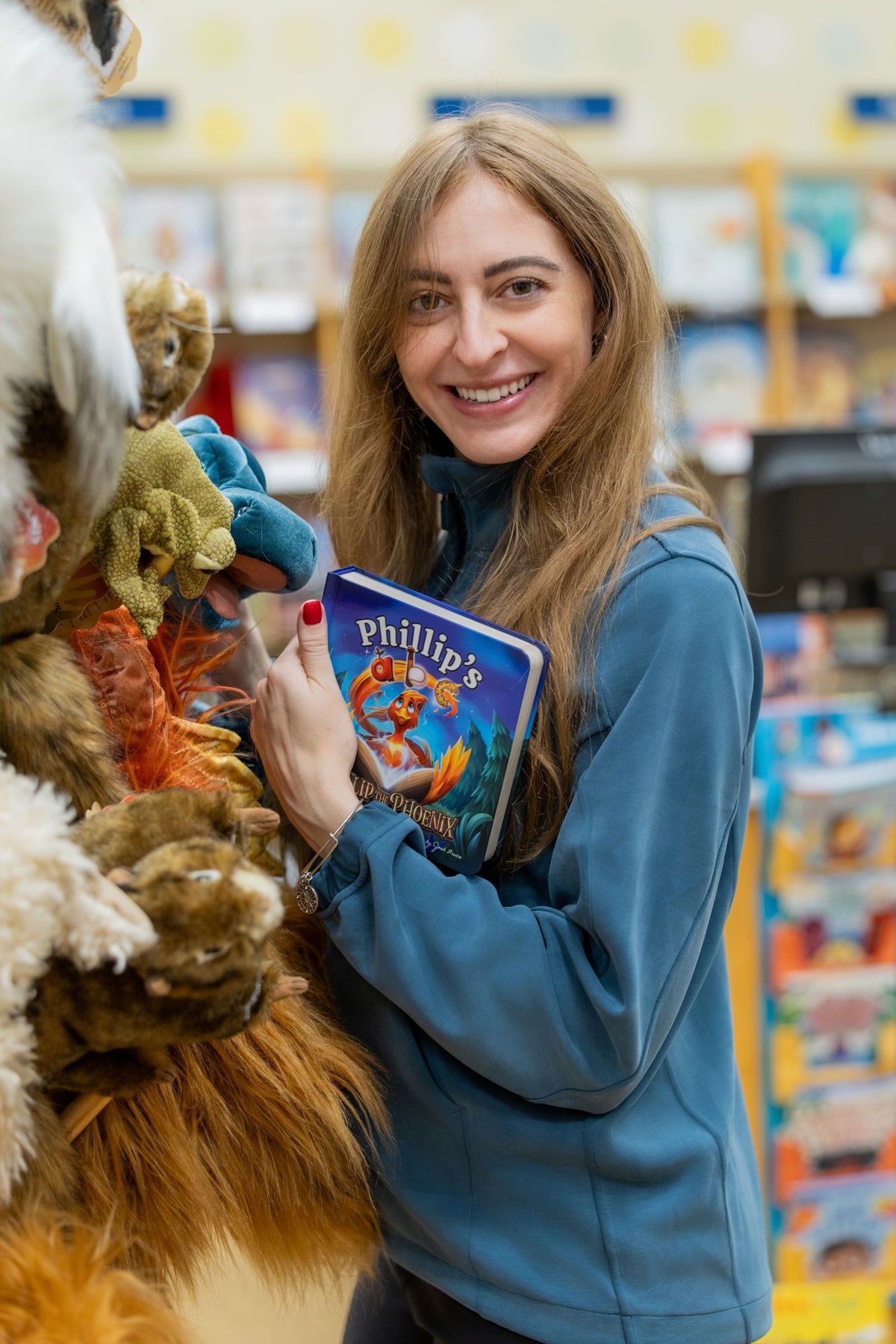
Katelyn (Kate) Skiechs, M.A., CCC-SLP, is a speech-language pathologist, educator, and designer who believes great learning doesn’t happen by chance. It happens by design.
She has over twelve years of experience supporting children and their families in New York public schools. Throughout that time, she also provided early intervention services to children from birth to age three. Her professional experience also includes private clinical practice, caregiver coaching, and independent speech-language evaluations.
Katelyn holds master’s degrees in both Speech-Language Pathology and Instructional Design. She is also a four-time recipient of the ASHA Award for Continuing Education, reflecting her commitment to ongoing professional learning and evidence-based practice.
Her experience in both clinical practice and instructional design shaped a philosophy that sets her work apart: rather than asking children to adapt to instruction, she believes instruction should adapt to children. She sees parents as a child’s first and most important teachers, and every interaction as a chance to support language and learning.
Katelyn is the creator of Phonic Forge™ and Phillip’s ABC, and the founder of Graphonic Mnemonics™, where she brings together speech-language pathology, instructional design, captivating visuals, and play-based learning to create practical resources for children, families, and educators.
Insiders hear it first
Help shape what we make next.
Be the first to know about new products, articles, and tutorials. Hear about upcoming events and where to find us at our next pop-up. You’ll also get behind-the-scenes peeks at what’s in development, chances to share ideas and weigh in before a product is finalized, and sometimes the chance to try new resources free before they’re released.
- New articles & tutorials
- Events & pop-ups
- Sales & promotions
- Behind the scenes
- Pilot new products